Rock chip or new windshield: how to tell which one you have
A small chip and a long crack look like the same problem from the driver's seat, but they usually end in very different places.
October 21, 2026 · 4 min read
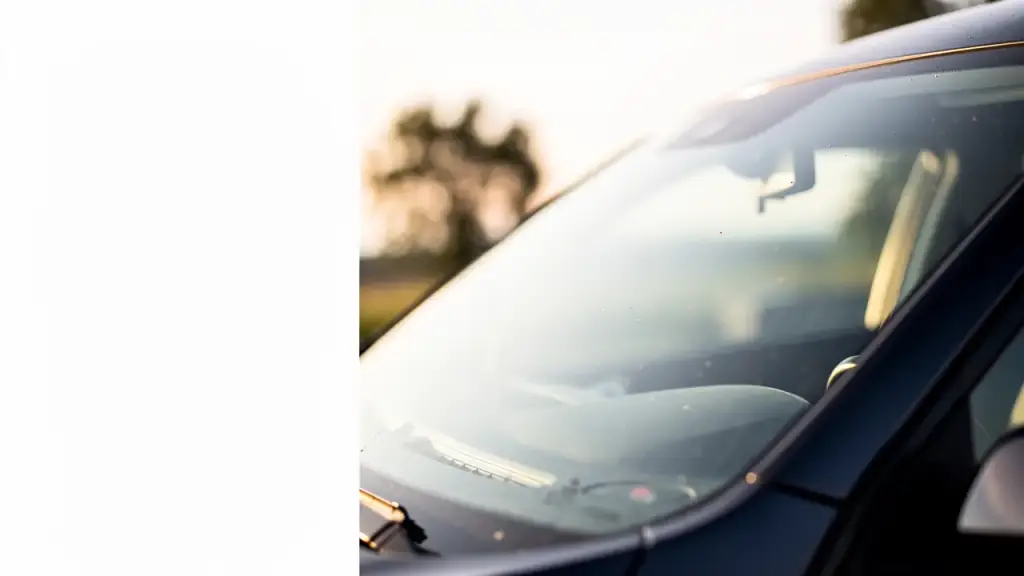
Most of us find out about a rock chip the same way. There's a sharp tick against the glass somewhere on the highway, you look up, and there's a small star or a pit sitting in your line of sight. The first question is always the same: can this be fixed, or do I need a whole new windshield?
The honest answer is that it depends on what the damage looks like and where it sits. A glass technician can tell you in about ten seconds with the glass in front of them, but you can get a good first read yourself from the driver's seat.
What a repairable chip looks like
A windshield is two layers of glass with a thin plastic sheet bonded between them. A rock usually breaks only the outer layer. When the damage stays in that outer layer, a repair is possible in principle: the break is cleaned out and filled with a clear resin that is cured in place. The resin stops the break from spreading and makes it far less visible, though in most cases it does not make it vanish completely.
As a general rule of thumb in the glass trade, these are the signs that point toward a repair:
- The chip is small, roughly the size of a coin or smaller.
- It is a bullseye, a star, or a small pit, with no long cracks running out of it.
- It hasn't picked up dirt and water, which make the break harder to clean out.
- It's not sitting right at the edge of the glass.
Time matters too. A fresh chip is a clean break. A chip that has been rained on, washed, and run through a few hot afternoons and cold mornings is a dirty break, and it has often started to grow.
Why chips spread
Glass flexes. Every bump in the road, every slammed door, every temperature swing from a cold night to a sun-baked parking lot puts a little stress on the windshield. A chip is a weak point, and stress concentrates there. Eventually one of those little flexes sends a crack out from the chip. Drivers often describe it as the chip suddenly growing overnight, and that's usually exactly what happened: a cold morning, a defroster blasting hot air onto cold glass, and the crack takes a run.
That's why the advice you'll hear from nearly anyone in the glass business is to deal with a chip early, even if it doesn't bother you. A chip you can barely see today is the easiest version of the problem to deal with, and the one with the most options.
When the windshield has to go
Some damage is past the point where a resin repair is a sensible answer. In general, these point toward replacing the glass:
- A crack that has grown long, especially one that runs most of the way across the glass.
- A crack that starts at the edge of the windshield. Edge cracks tend to keep travelling, because the edge is where the glass is under the most stress.
- Damage that goes through both layers of glass.
- Several chips close together, or a chip directly in the driver's line of sight, where even a good repair can leave a bit of distortion.
The windshield isn't only a window. It's a structural part of the vehicle, and it helps the roof hold its shape. A windshield with a long crack is a windshield that has lost some of its strength, and no amount of resin changes that. When a technician tells you it needs to be replaced, that's usually the reason.
What a good repair looks like afterward
One Byron customer, Kevin, left a Google review in 2020 about his cracked windshield on a 2019 Toyota Camry: “The man that fixed it was in and out in under 15 minutes and it looks as if the crack was never there!” That's one customer's job on one day, not a promise about every visit, since each piece of damage is different. But it does describe what a good outcome feels like: you get in the car and stop thinking about the glass.
Be realistic about the finish, though. Where a repair is the right call, the goal is to stop the break from growing and to leave the glass clear enough that you don't notice it. A faint blemish where the chip was is normal, and it's a lot better than the crack that would have come next.
What you can do in the meantime
If you can't get to a glass shop the day it happens, a few habits help. Park out of direct sun if you can. Go easy on the defroster and the air conditioning, because sudden temperature changes are one of the most common triggers for a crack. Avoid slamming doors, and skip the car wash with high-pressure jets until the chip has been looked at. Some drivers put a piece of clear tape over the chip to keep dirt and moisture out, which is a reasonable stopgap, but it's no substitute for having it looked at.
If you're not sure which side of the line your windshield is on, the windshield chip repair page lays out how Middle Georgia Glass Works handles rock damage, and you can call the shop at (478) 956-0111 to describe what you're looking at. Hours are Monday through Thursday, 8:00 AM to 5:00 PM, and Friday, 8:00 AM to noon.
Middle Georgia Glass Works, (478) 956-0111
Call (478) 956-0111More articles
The first hour after a rock hits your windshield on the interstate
What you do in the first hour decides how many options you have left, and most of it costs nothing.
Fog between the panes: what a failed seal in a house window means
If you can see mist or droplets and a cloth won't reach them, the problem is inside the glass unit itself.